No One at the Desk: The Human Cost of Britain's Self-Service Studio Boom
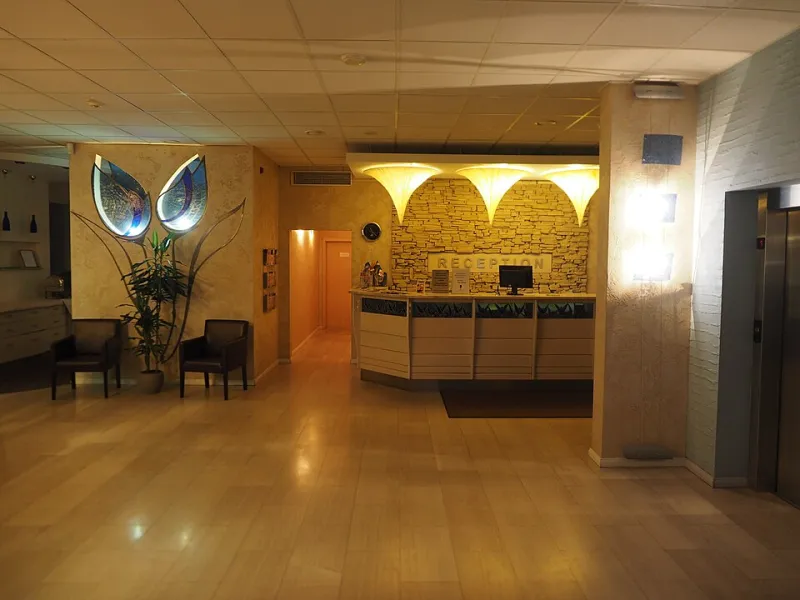
Photo: JIP, CC BY-SA 4.0, via Wikimedia Commons
On a wet Tuesday in Leeds, a four-piece load-in happens without a hello. The band texts the number on the door, a key safe clicks, and they carry amps through a corridor that smells faintly of coffee and old carpet. The studio owner, Mara Ellison, is mid-take in room two. She waves through the glass but does not break the spell. The door has done its job. The welcome, such as it is, has been automated.
This is not a story about studios becoming unfriendly. It is a story about admin moving house. Across the UK, small rooms have quietly replaced receptionists, landlines and drop-in hours with booking platforms, smart locks, deposit links and group chats. The change saves hours. It also removes a role that was never really in the job description: the person who answered the phone, signed for the courier and told a nervous singer where to park.
The desk was never just a desk
Ask owners what a receptionist actually did and the list gets long fast. They took enquiries. They chased deposits. They let engineers know when a band was running late. They signed for parcels, handed over keys, made tea and occasionally talked a first-time artist down from a panic about whether the red light meant the take was ruined. In smaller buildings, the desk was also the local noticeboard: a poster for a drum clinic, a stack of demo CDs, a bass player looking for a function band.
Ellison describes it as air traffic control for the day. When her receptionist left, she did not replace the role. She bought a booking system and a smart lock, set up a WhatsApp group for each session, and put a laminated sign by the door. The studio saved roughly fifteen hours a week in admin. It also lost the person who used to spot the warning signs before they became a problem.
What the apps actually do
The practical wins are real. Booking software collects deposits without a card machine conversation. Automated emails send directions, load-in times and house rules. Group chats keep everyone in one place, which matters when a drummer is stuck on the M62. Smart locks mean no one has to hand over a key at 7am. CCTV and doorbell cameras give owners a bit of reassurance when the building is empty.
Ben Okafor, who runs a converted warehouse space in Bristol, says the switch paid for itself within a few months. Missed calls were his biggest leak. If he was tracking, he could not answer. If he was mixing, he forgot to ring back. The app does not forget. But Okafor is clear that the admin did not disappear. It moved into his pocket. He now answers messages between takes and sometimes at 11pm. The savings are in staff hours, not in mental load.
This is the first practical check any studio should make: count the hours saved, then count the hours spent replying to messages. They are rarely the same number.
The first-timer problem
A locked door with a code is fine for a session drummer who has done it a hundred times. For a 19-year-old singer from Glasgow booking her first EP day, it can feel like turning up to a party where no one is at the door. One artist I spoke to arrived forty minutes early, sat in her car and waited because she did not want to seem too keen. The group chat was friendly. The automated email was thorough. Neither was the same as someone saying, come in, kettle is on, you must be frozen.
This is not nostalgia for receptionists. It is a usability issue. First-time clients need orientation: where to load in, where to leave cases, which door is which, whether they can use the kitchen. A good studio can solve most of this with a short welcome video, a named contact and a clear arrival message. A bad one sends a PDF and hopes for the best.
Couriers, keys and the practical mess
The desk also absorbed the physical stuff. Parcels need signatures. Gear needs to be left somewhere safe. A courier turning up with a £2,000 microphone and no one to sign for it is a problem that a booking app cannot solve. Some studios have installed parcel boxes. Others redirect deliveries to a nearby shop or arrange click-and-collect. It works, but it adds cost and friction.
The maths can get awkward. The £120 saved on a reception shift can disappear into a £90 lock, a £40 camera and a missed delivery that has to be rebooked. Ellison says she now keeps a part-time desk presence on Fridays and Saturdays, when the bulk of first-time bookings land. It is not a full return to the old model. It is a hybrid: automated access most days, a human on the busy ones.
The local hub bit
There is another loss that is harder to invoice. Small studios used to be places where people knocked. A local promoter might drop off a flyer. A parent might ask if her son could borrow a mic stand for a school gig. A band might turn up with a demo and a hopeful face. None of that is billable, and not all of it is missed. Some owners are glad the drop-ins have stopped. But community studios in particular say the desk was part of their local role.
A Peckham studio owner told me she used to keep a list of local drummers, bass players and session singers behind the desk. It was informal, scruffy and useful. Now the list is a spreadsheet nobody updates. The studio is busier than ever, but the front room is quieter.
Does the maths work?
For many UK rooms, the self-service model is here to stay. Rates are tight, staffing is hard, and artists expect to book at midnight from their phones. The question is not whether to automate. It is what to automate. Deposits, directions and access codes are obvious candidates. The welcome is not.
A practical compromise is emerging. Studios send a short voice note before the session. They name a contact who will actually reply. They keep the kitchen open and the kettle visible. They block out twenty minutes for arrival on first bookings. They treat the group chat as a handover, not a replacement for a host.
The front desk may be gone from many British studios, but the need for a welcome has not. The best rooms still answer the phone, even when the phone is a message thread and the answer is a voice note from the owner saying, code is 4412, come in, I will be with you in five.