Before the Lamps Come On: The Winter Sun as a Session Player
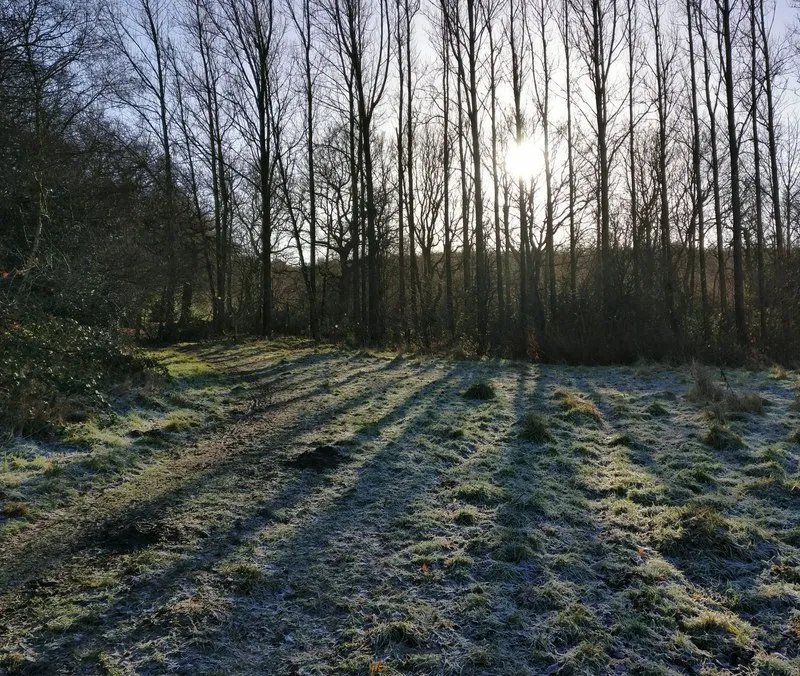
Photo: Mat Fascione , CC BY-SA 2.0, via Wikimedia Commons
At 16:02 on a Tuesday in Manchester, the sun is already sliding behind the warehouse roofs across the yard. Inside the live room, the engineer is not watching the clock. She is watching the window. The light has gone from a flat grey wash to a low amber bar across the back wall, and it is moving. In about eleven minutes it will reach the vocal mic. That is the cue.
This is the season when British studios start treating daylight like a member of the band. Not as atmosphere, not as a background mood, but as a moving source that has to be placed, softened, blocked or chased. The winter sun sits low for most of the working day, then drops fast. By late November, Glasgow is losing its light before four. Manchester is close behind. Even in Bristol, the good window is shorter than the tea break.
The hour the room changes
Low sun does not behave like a lamp. It rakes across the floor at a shallow angle, picks up dust that no one knew was there, catches the grille of a microphone and throws a hard line across a singer's face. On camera it flares. On a vocal take it can sound like the room has changed shape, because the room has changed shape — at least in the way the reflections and the air feel to the person standing in it.
Engineers who work in rooms with big windows learn the arc of the year. In summer, the problem is too much light too early. In winter, the problem is a narrow band of useful light that arrives when everyone is still setting up and disappears before the first comp. The solution is not complicated, but it is deliberate: put the acoustic guitar in the window hour, save the lead vocal for the soft light just before it, and leave the overdubs for after the lamps go on.
One Bristol engineer calls it the solar slot. She blocks out two hours in the diary and tells artists to arrive early. Not because the sun makes a performance better in any measurable way, but because it makes the room feel different, and some singers respond to that difference. The light is a cue, she says. It tells everyone that the day is nearly over without saying a word.
Flags, sheets and the quiet art of the gobo
Direct winter sun on a microphone capsule is rarely welcome. It brings heat, uneven response, visible dust and a flare that ruins any filmed session. So the first job is not to capture the light but to tame it. In smaller UK rooms, that often means a clothes horse and a duvet. In converted mills and garden studios, it means a proper flag: a moving blanket clipped to a boom arm, a sheet of ply, a black fleece behind the pop shield.
The aim is not to black out the window. It is to make the sun behave like a softbox. A sheet of tracing paper taped across a sash window can turn a hard bar of light into a glow that fills the room without hitting the mic. A white wall becomes a reflector. A dark curtain becomes a flag. One engineer in Leeds keeps a roll of 250gsm tracing paper in the live room alongside the gaffer tape, because it is cheaper than a diffuser panel and easier to replace when a session gets enthusiastic.
The kit is not glamorous. Most of it lives in a cupboard marked sun stuff. But it is part of the craft now, especially in rooms where the window is the only natural light and the artist has asked to record before the big light goes on.
Why the performance changes before the lamps go on
There is a psychology to daylight that no one has managed to put on a plugin. Lamps make a room feel like a studio. Daylight makes it feel like a room. Some vocalists relax in the last hour of window light because they can see the day ending, and the take stops feeling like an exam. Others hate it, because the light moves and they can feel time pressing on the performance.
Engineers tend to be pragmatic about this. They will not claim that a vocal recorded at 3:45 is technically better than one recorded at 5:30. But they will say that the performance is different, and that difference can be useful. One London engineer describes the four o'clock take as the one where the singer stops performing for the room and starts performing for themselves. That is not a rule. It is a pattern.
The risk is obvious. Winter light is cold, and cold hands do not play guitar well. The window is short, and short windows make people rush. The best rooms build in a buffer: a warm-up, a tuning check, a cup of tea, a second mic already placed. The four o'clock light is not a licence to hurry. It is a reason to be ready.
The diary around the sun
Scheduling around the sun is not new. Photographers have done it for ever. But it is becoming more visible in studio bookings, especially in rooms with south-facing windows and artists who want a live video alongside the track. Some engineers keep a sun map taped to the wall. Others use a tracking app on their phone. A few simply know that the light hits the piano at half three and the vocal position at ten past four, and they book accordingly.
Basement rooms cannot play this game, and neither can studios with blackout blinds and no view. But garden rooms, converted chapels and the upstairs rooms of old pubs can. In those spaces, the winter sun is not a problem to be solved. It is a condition of the room, like the hum of the fridge or the neighbour's dog. You learn when it arrives, you decide whether to use it, and you get on with the take.
After the last of it
By ten past four, the amber bar has gone. The lamps come on. The room settles back into its artificial shape, and the session continues. The take from the window hour is still there in the DAW, marked with a name that usually includes the word sun. It may not make the final mix. It may be a comp. But it exists because someone looked at the clock, looked at the window, and decided that the light was part of the session.
That is the quiet shift in British rooms this winter. The sun is not just something that happens outside the studio. It is something that happens inside it, for a few minutes, if you are ready.