Whose Name Goes Where: The UK Studio Credit Audit Starting at the Booking Desk

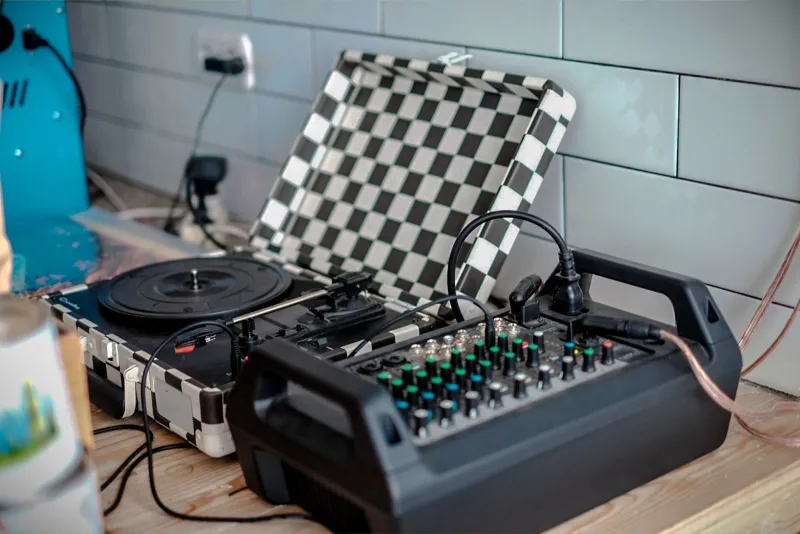
Photo: Michael Coghlan from Adelaide, Australia, CC BY-SA 2.0, via Wikimedia Commons
You can hear the bass part. You just cannot find the bass player. That is the strange little gap opening up across UK releases right now: the track sounds finished, the streaming page looks tidy, and the person who played the hook is nowhere in the credits. For session musicians, backing vocalists and engineers, that gap is not a cosmetic annoyance. It is a shop window with the curtains drawn.
The old liner-note model was never perfect. Sleeves were crowded, budgets were tight, and plenty of names were lost to shorthand. But streaming has made the credit question both more visible and more slippery. Spotify, Apple Music and Bandcamp each present contributor information differently. A distributor may accept a long list of performers; a platform may surface only some of it. Bandcamp can carry a full paragraph of thank-yous; a streaming service might reduce the same release to a clean artist line and little else. If nobody checks the handover, the name in the notebook does not always become the name on the page.
The bit between the session and the release
In UK rooms, the problem usually starts with good intentions. A producer books a string player for two hours. The booking email mentions the track, the date and the fee. The session goes well. The engineer exports the files, the artist sends a thank-you message, and everyone moves on. Months later, the release appears with a credit that reads simply: strings. No name. No indication of who arranged them, who played them or who stayed late to double the part.
That is where the audit instinct is creeping in. Some session players now keep their own release diary: artist name, track title, studio, date, instrument, and the name they were booked under. When the song lands, they check the credits on each platform and compare notes. It is not glamorous work. It is closer to chasing an invoice than chasing a hit. But the logic is straightforward. A missing credit makes it harder for the next artist to find you, harder for a producer to recommend you, and harder for a listener to follow the thread from one record to another.
Backing vocalists feel the squeeze more sharply. Their work can be buried in a stack of harmonies, yet their reputation depends on being recognisable as a contributor. Engineers have a similar issue. A mix can be praised in a group chat and still arrive on release with no mix credit. The result is a strange form of professional invisibility: audible everywhere, searchable nowhere.
Fairness is only half of it
There is a fairness argument here, and it matters. Credits are part of how creative work is acknowledged, especially when fees are modest and the session is a day's graft rather than a long-term royalty share. But the practical argument is just as strong. UK session players operate on recommendation. A credit that leads back to a name is a calling card. A missing credit is a dead end.
Small studios are starting to treat this as part of the delivery, not an afterthought. The most effective habit is also the least dramatic: a contributor sheet created at booking and updated during the session. It does not need to be a legal document. It can sit alongside the track sheet and list everyone who touched the recording, including the assistant who set up the room, the vocalist who added the ad-libs and the engineer who did the rough bounce. When the files leave the building, that sheet leaves with them.
What the booking desk can do
Room owners do not need to become metadata specialists. They need to make the credit conversation normal. A short line in the booking confirmation can ask whether the artist wants contributor names passed to the distributor. A tick-box on the delivery email can prompt the artist to confirm the spelling of every name. A shared document can travel with the session files. None of this guarantees that a platform will display the information exactly as intended, but it makes the information available in the first place.
The second habit is consistency. Session players often use different versions of their names across different bookings: a shortened form for one artist, a full name for another, a professional alias for a third. That is fine in conversation, but it causes confusion at delivery. A simple preferred credit name, stored with the booking details, saves an enormous amount of tidying later. The same goes for instruments and roles. 'Guitar' is less useful than 'guitar and baritone guitar'. 'Vocals' is less useful than 'backing vocals'. The more precise the handover, the better the chance that the credit survives the journey.
A credit check the artist can actually use
For artists, the audit can be refreshingly low-tech. Before delivery, read the contributor list aloud. If a name is missing, add it. If a role is vague, sharpen it. If someone was booked under a different name, confirm the version they want used. Then check what the distributor accepts. Some systems have separate fields for performers, engineers and songwriters; others rely on free-text notes. Do not assume that one field covers everything. A split sheet is not a credit sheet. A thank-you list is not a metadata plan.
When the release goes live, spend ten minutes on the credits page rather than only the artwork. Check Spotify, Apple Music and Bandcamp separately. If something has dropped out, ask the distributor whether it can be corrected. It may take time, and not every platform will display every detail. But the act of checking changes the culture around the release. It tells the room that names matter after the session has ended.
The quiet professional habit
The credit audit is not a campaign, and it does not need a slogan. It is a small correction in how UK studios hand over work. The best rooms already keep good track sheets, good invoices and good communication. Adding the contributor list to that routine is a natural next step. It protects the session player, helps the artist and gives the studio a reputation for finishing the job properly.
You can hear the bass part. The next job is making sure everyone can find the bass player.