The 07:42 Test: Why UK Mix Rooms Are Checking Earbuds Before Monitors

Photo: IthakaDarinPappas, CC BY-SA 4.0, via Wikimedia Commons
A mixing engineer in Manchester has a ritual. Before he bounces a track, he puts on a pair of wired earbuds, opens the file on his phone and walks to the tram stop. He listens on the way into town, then again on the way back. If the vocal disappears under the bass on a crowded Northern Line service, he goes back to the session. If the hi-hats slice through his skull, he goes back again. The car test has been replaced by the commute test.
This is not a niche habit. Across UK studios, engineers are making mix decisions for listeners who will never sit in a treated room. They are checking records on earbuds, phone speakers, laptop drivers and cheap Bluetooth cans. The monitor sweet spot still matters. But it is no longer the only place where a mix has to work.
From the car park to the 07:42
The car test made sense for a generation of engineers. A car gave you a sealed listening space, a familiar system and a chance to hear the low end without a room flattering it. You could play the mix on the way home, notice that the kick was too loud, and fix it in the morning. It was practical, repeatable and slightly smug.
In 2026, fewer people have that option. Parking is expensive. Car ownership in cities is falling. And the way most people hear music has changed. The commute is the new listening room. It is a pair of earbuds on a packed train, a phone speaker on a kitchen counter, a laptop on a sofa, a Bluetooth speaker in a shared flat. Each one is a different kind of compromised.
UK engineers have adapted. Some check mixes on the bus. Some check on a walk through Bristol's harbour. Some check on the Overground with a pair of Apple earbuds and a frown. The point is not to make the mix sound perfect on a bad system. The point is to find out what survives when the system is bad.
What earbuds expose
Earbuds are ruthless about vocal clarity. A vocal that sounds warm and close on studio monitors can sound distant and fizzy on a pair of cheap buds. Sibilance becomes a problem. So does the level of the lead vocal against a busy instrumental. If the singer is even slightly buried, the listener will hear the beat and miss the words.
The commute test also exposes arrangement problems. A mix that relies on a wide stereo image can collapse in mono. A bass line that sounds deep in the room can vanish on a phone. A snare that feels punchy on monitors can turn into a click. These are not new problems. But the earbud-first approach makes them harder to ignore.
The bass trade-off
Bass is where the debate gets heated. Earbuds can deliver surprising low end, especially sealed models with a decent fit. Phone speakers cannot. If you mix for the phone, you risk making the bass too loud for earbuds. If you mix for earbuds, you risk making it too thin on a proper system.
The compromise is usually to check the bass on multiple devices and trust the midrange. A bass line needs to be audible on a phone, not necessarily huge. A kick needs to have a click that cuts through. A sub can be lovely, but it cannot be the only thing carrying the low end. UK engineers are increasingly using saturation, harmonic distortion and mid-bass information to make low end translate. It is not glamorous, but it works.
Gear choices in UK rooms
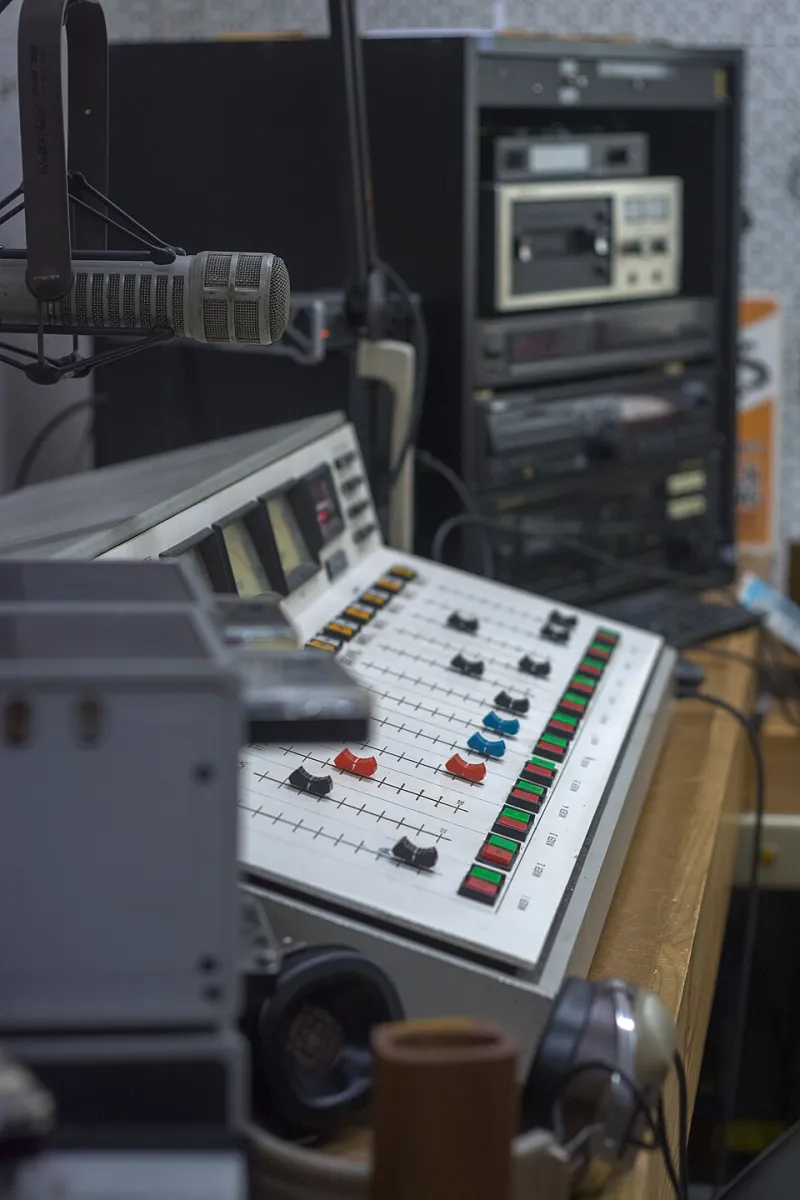
Walk into a UK mix room in 2026 and you will still see big monitors. You will also see a small mono speaker, a pair of NS10s or Auratones, a laptop, a phone and a drawer of earbuds. The gear list has expanded, but the logic is old-fashioned: check the mix on as many real-world systems as possible.
Room correction software is now common, even in modest rooms. Engineers use it to flatten the worst peaks and dips, then switch it off to hear the room as it is. Some use modelled headphone systems to simulate different playback environments. Others keep it simple: a pair of cheap wired earbuds, a phone speaker and a trusted reference track.
The best rooms treat earbuds as a second opinion, not a primary monitor. They do not mix on earbuds for eight hours. They mix on monitors, then check on earbuds, then go back. The earbuds reveal problems. The monitors solve them.
The risk of chasing devices
There is a danger in all this. If you mix for the worst-case playback, you can make a record that sounds small everywhere. You can over-compress the vocal, thin out the bass and flatten the dynamics just to survive a phone speaker. That is not translation. That is fear.
The commute test should be a check, not a target. A great mix does not need to sound identical on every device. It needs to retain its character, its vocal and its groove. If the song still works on a crowded train, you have done your job. If it only works on a £3,000 monitor system, you have a problem.
The new final checkpoint
The car test was never really about cars. It was about hearing the mix in the real world, away from the room that had flattered it. The commute test is the same idea with different hardware. It is a reminder that most listeners are not sitting in the sweet spot. They are on a bus, in a kitchen, on a walk, with one earbud in and the other ear listening for their stop.
In 2026, UK engineers are not abandoning monitors. They are adding a final checkpoint. The 07:42 test is not glamorous. It is not scientific. But it is honest. And honest is usually where a good mix starts.