Kettle First, Kick Drum Second: The Unwritten Rules of the Studio Brew Round
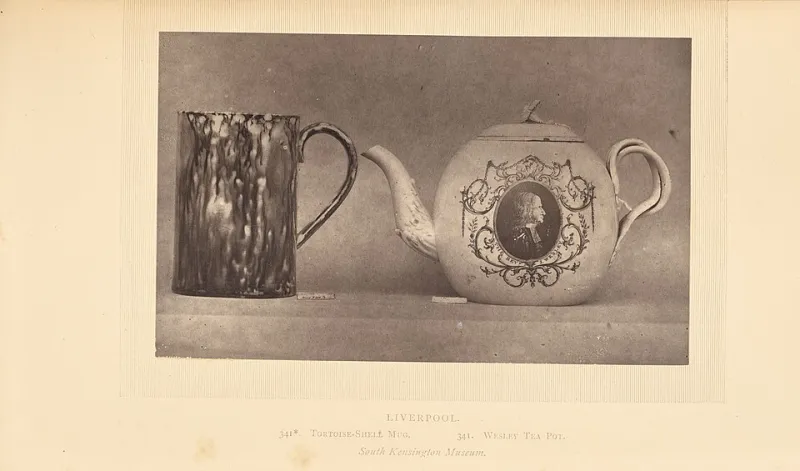
Photo: William Chaffers, CC0, via Wikimedia Commons
At 9:40 on a Tuesday morning in a converted mill outside Halifax, the first take hasn't happened yet. The guitarist is still unzipping a gig bag. The engineer is crouched behind a rack, chasing a hum. And the runner — call him Dan — is already halfway through a tray of mugs. The kettle clicks off. Someone says "same as before?" and the day begins in earnest.
In a British studio, the tea round is not a break from the session. It is the session's metronome. It marks the start, the stalls and the small victories. It buys thinking time without anyone having to admit they need it. And it is almost never written down.
The Brew as a Scheduling Tool
Engineers learn early that a well-timed brew can do more than caffeine. When a vocalist is struggling with a phrase, a round of tea can reset the room without a producer having to call a break. When a drummer is re-taping a kit, the runner knows to wait. When a mix is going nowhere, the offer of a biscuit is a diplomatic way of saying "let's step back for five minutes."
"You can tell how a session is going by how many brews get drunk," says Priya, a studio manager in Bristol. "If it's one round all day, they're flying. If it's five, something's wrong — or something's very right and nobody wants to stop." The round is a soft schedule, a series of small, socially acceptable pauses that keep a day from tipping into fatigue or friction.
It also functions as a handover mechanism. The morning round belongs to the runner. The afternoon round often passes to the assistant engineer or whoever is least tied to a screen. The last round of the day — the one that comes with a biscuit and a look at the clock — is usually the studio owner's way of saying "we're close, but let's not rush the last take."
Mug Diplomacy and the Biscuit Tin
How someone takes their tea is a small social contract. The builder's tea with two sugars. The weak lemon. The herbal tea that arrives in its own box because the studio only stocks one brand. The mug matters too. Nobody gives the producer the chipped one. The good mugs come out for clients; the mismatched ones stay in the live room.
Then there is the biscuit tin — the most honest mood ring in the building. A tin of custard creams and Hobnobs says the studio is looking after its people. A tin of Rich Tea and a broken digestives says the budget has already been spent on tape. "I've seen a session turn around because someone brought out the good tin," says Marcus, an engineer in London. "I've also seen a band nearly split over the last custard cream. Both are real."
The tin is also a barometer of experience. Runners are told, gently, that the first biscuit goes to the artist. The second goes to whoever is doing the most physical work. The third can be a peace offering to a guitarist who has been redoing a solo for an hour. These rules are never printed. They are absorbed.
The Runner's Run
The runner is the heart of the operation, even if the role is often invisible on the credit list. The run is not just fetching and carrying. It is listening. It is remembering who is dairy-free, who takes sugar, who is too polite to ask for a second cup. It is noticing when the energy drops and when a round would be welcome rather than an interruption.
"The best runners don't ask 'tea?' — they ask 'same as before?'" says Tom, who runs a room in Manchester. "That's the job. Remembering. Anticipating. Not spilling." Many engineers started as runners precisely because the kettle taught them to read a room. You learn when to be invisible, when to be quick, and when to make a joke about the biscuit situation.
The Invisible Line Item
The tea round never appears on an invoice. It is absorbed into the day rate, the hourly rate, the cost of doing business. Compare that with gear hire, tape stock or catering, all of which get itemised. The brew round is labour that doesn't get counted — a small, daily act of care that keeps the machinery of a session running.
In self-service studios, where the artist engineers and the runner is a memory, the tea round often disappears. Some rooms have an honesty tin for milk and biscuits. That is the closest it gets to accounting. But a tin is not a round. The round requires someone to notice, to offer, to carry. It is a small social technology that no booking system has managed to replace.
The Last Bit of Culture
The tea round survives because it is not a product. It cannot be scaled, charged for or optimised. It is just a way of saying "we're in this together" without anyone having to say it out loud. As studios close and open, as consoles become plugins and rooms become apps, the kettle remains. The runner returns with the tray. The engineer takes the chipped mug. The guitarist stops tuning. The session starts — or rather, it already did, somewhere between the first boil and the last biscuit.