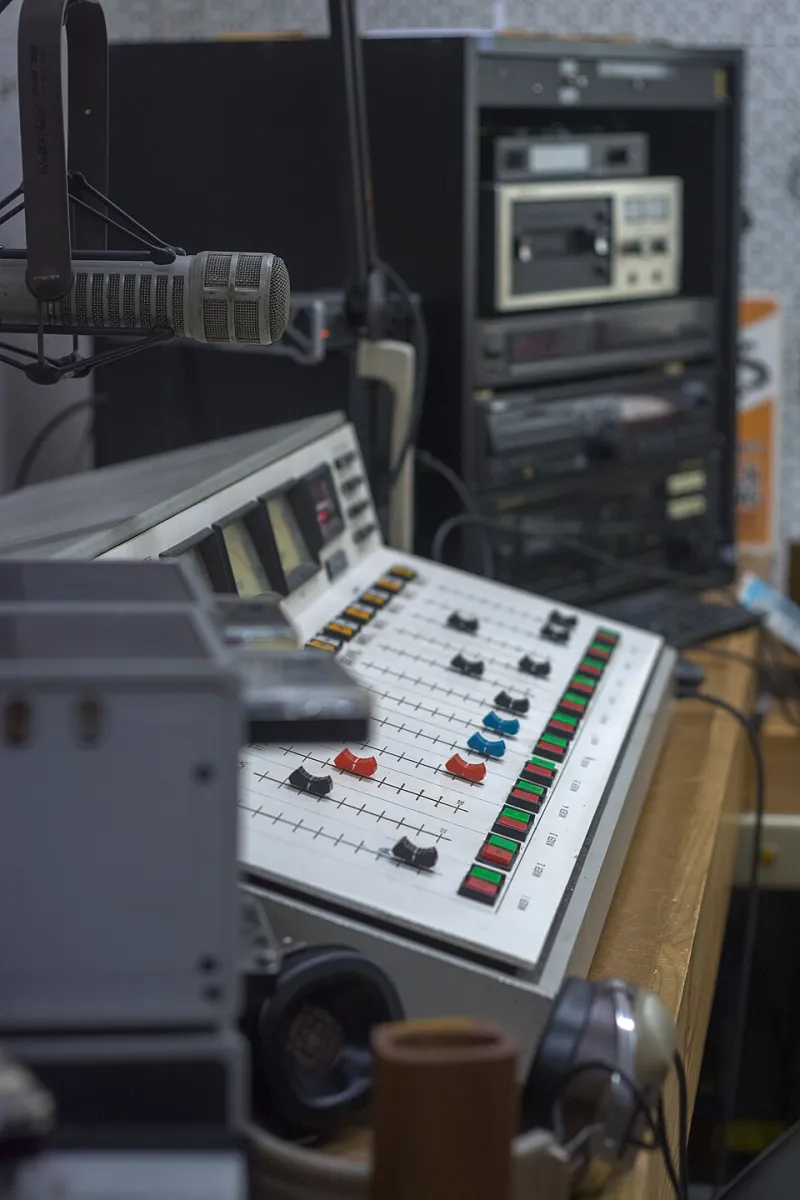
Tape Circles: Inside the UK's Four-Track Demo Clubs, Where Nothing Gets Played Twice
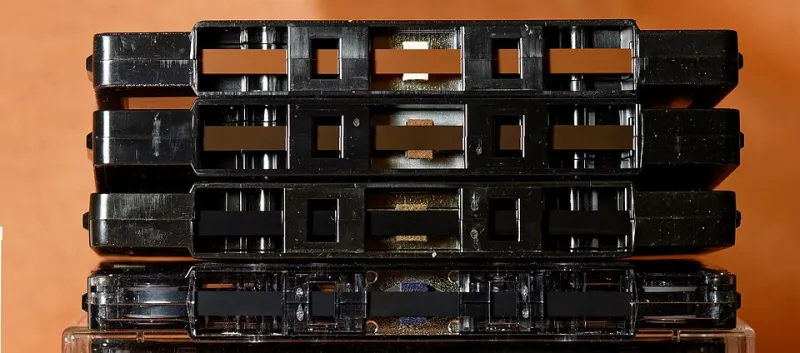
Photo: Retired electrician, CC0, via Wikimedia Commons
There's a particular smell to a demo club night: warm dust, cheap beer, and the faint tang of a cassette deck that's been running since doors. If you've spent the last decade watching release strategies get frictionless, the appeal is obvious and slightly perverse. The UK's four-track demo clubs have decided the way to get heard is to make it harder.
A tape, a stamp, a date on a card
The format shifts from city to city. In Leeds there's a monthly swap where members bring a C30 of something unfinished and leave with somebody else's. Glasgow runs a quarterly spool night — twenty minutes of tape each, played start to finish, no skipping, no phones held up. Bristol's version grew out of the back room of a record shop and now fills a function room above a pub. Sheffield has one that meets in a rehearsal studio and finishes with everyone tracking a single take to a shared four-track.
Membership tends to run £5–£15 a month, or a one-off joining fee. That money goes into duplication, mastering the odd compilation, and keeping a serviced deck on the premises. Nobody is getting rich. That's sort of the point.
Tape closes the door on the edit
“With a DAW, an artist will do forty vocal takes and pick the one that's three per cent better,” says Priya Raghavan, an engineer in Manchester who has run a demo club for two years. “On a four-track, once you bounce, you've bounced. That decision turns into a performance. You commit because you have to, and the commitment is audible.”
Engineers who work with tape-fed artists make a similar argument from the other direction. Cassette's noise floor, its gentle compression, its narrow frequency window — none of it is hi-fi, and that's the point. Printing drums to two tracks and leaving them there is a creative constraint that produces arrangements instead of layers. Songs get shorter. Parts get simpler. Choruses arrive sooner because you can't afford a third verse you don't need.
The club rule that does the most work isn't technical, though. It's the twenty-minute limit. A tape that runs out is a deadline, and a deadline is the fastest mixing decision you'll ever make.
What a run actually costs in 2026
Here's where the romance meets the invoice. Quotes we gathered for a fifty-run of chrome C60s with printed J-cards, clear shells and cases came in between £190 and £320, depending on turnaround and whether you want the duplicator to print the labels. Ferric stock drops it a little; coloured shells and shell printing push it up. Nobody in the UK is doing this at scale any more — you're often dealing with a two-to-four week lead time and a small number of machines doing real-time dubbing.
The DIY route is cheaper on paper and dearer in hours. A serviced four-track and a stack of blank C60s will get you a mail-order run for maybe £60–£90 in materials, plus roughly eight to ten minutes of real time per tape and your own patience. Everyone we spoke to insisted on one thing: get the deck serviced first, ideally aligned, or your run will drift pitch across sides.
“Fifty tapes at eight quid is four hundred pounds,” says Callum Ferris, who runs a micro-label out of a shared studio in Glasgow. “Take off duplication, postage, the Bandcamp cut. You've made a hundred and fifty quid and you've got a box of tapes that will sit in your hallway for a year. It isn't a business model. It's a community fund that happens to have a barcode.”
Postage is the quiet killer. A single tape in a padded large letter is a couple of quid through Royal Mail; a ten-tape bundle is a small parcel and jumps accordingly. Clubs often absorb that, which is why membership fees exist at all.
The listening night is the release
What the tape actually buys is a room. A demo club night turns a release into an event with a fixed date, an audience that is physically present, and a hard stop. Artists who've come through the format describe the same knock-on: mailing lists that grow faster than follower counts, gigs where the door price includes a tape, and a slower, stickier kind of attention.
There's also a useful side effect for anyone who plays live. A cassette demo passes through hands. Somebody's housemate hears it in a car. A promoter gets handed one after a support slot. Streaming analytics tell you where a listener skipped; a tape tells you who kept it.
The awkward parts
Nothing about this is automatically good. Clubs can drift into gatekeeping, and a format built on scarcity can turn clique-ish if the door isn't held open. Quality varies wildly — some compilations are beautiful, some are unlistenable, and the second kind is harder to forgive when you've paid for postage. There's also the plastic question, which organisers tend to answer by reusing shells, going ferric, and skipping shrinkwrap.
And tape is slow. If your whole plan is to be on a playlist by Friday, the demo club is the wrong door to knock on.
If you fancy starting one
Start with a rulebook: maximum length per member, one tape in one tape out, a date, and a deck that lives somewhere safe. Find a duplicator before you announce anything — the supply of decent shells is tight and lead times stretch around Christmas. Budget for postage you won't recoup. Keep a listening night cheap and seated. And resist the urge to make it a label too early; most of the good ones are still just a room, a kettle and a queue for the deck.