The Last Handover: What Britain’s Closing Studios Leave Behind
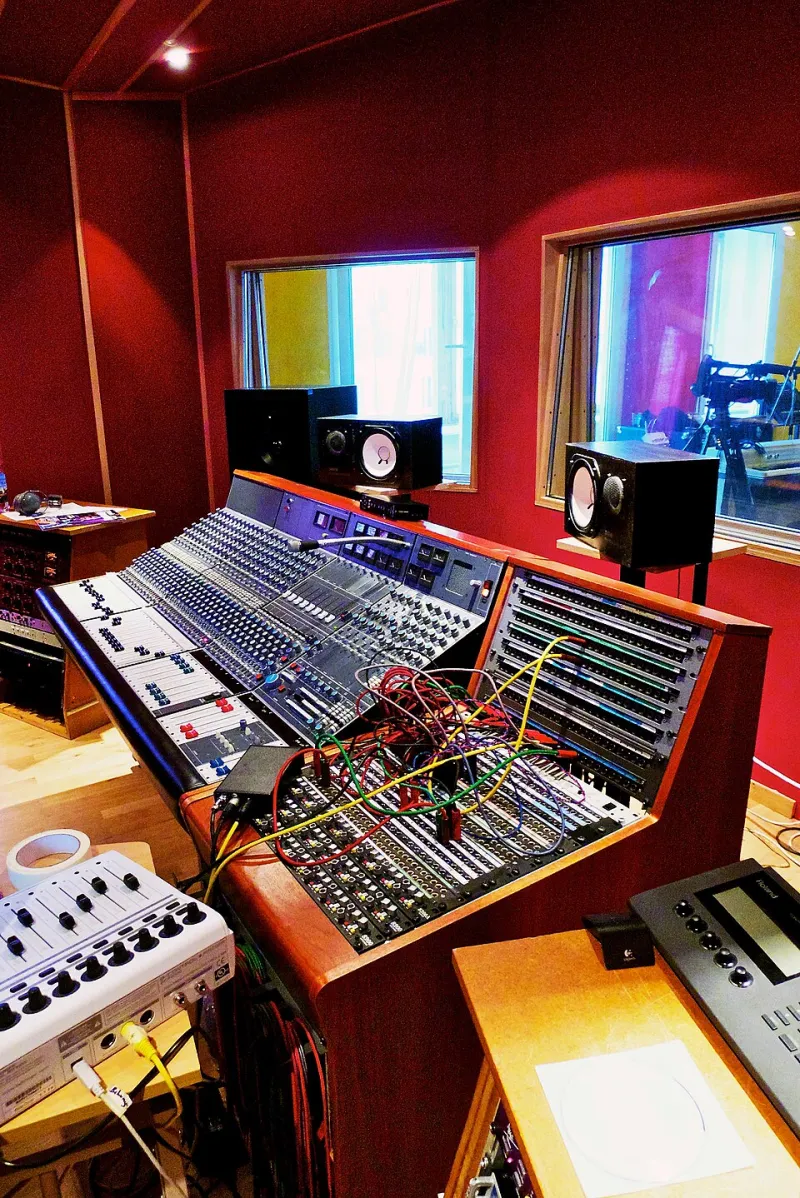
Photo: Marc Wathieu from Huy, Belgium, CC BY 2.0, via Wikimedia Commons
Studio closures are usually reported as dates: the final session, the last bounce, the padlock on the door. The longer story starts afterwards, in the hallway, where a lifetime of recording equipment is waiting to be labelled, valued and argued over.
In 2026, that story is playing out more often. Britain has a deep stock of rooms built around engineers who came up in the 1970s, 1980s and 1990s. Some are retiring; some are handing back keys after a rent review; others are clearing a parent’s council lock-up or a converted garage that has been a studio since before anyone thought to call it a home studio. The gear is often valuable. The knowledge attached to it is not automatically part of the sale.
The inventory is only half the room
On paper, a clearance looks like a list: console, tape machine, outboard, monitors, mic locker, stands, cables. In practice, the most useful documents are rarely in the valuation. They are the pencilled patchbay legends, the service book with a tech’s mobile number, the note that channel 14 runs hot unless you engage the pad, the sticky label on a compressor that says do not move — detent gone.
That is the quiet will. Not a legal document, but a set of instructions left in the room by someone who knew how the place behaved. A studio is an instrument made of copper, wood, mains wiring and habit. The gear is the visible part. The habits are what make it usable.
Families learn the language late
Families are often the first custodians, and they are usually learning the language at the worst possible moment. A daughter or brother may know the studio took up weekends, but not that a particular preamp was modified, or that the desk’s power supply needs a soft start, or that the patchbay is custom-normalled in a way no manual will explain. One common scene: a WhatsApp group of local engineers, a shared spreadsheet, and a nephew taking photos for an online listing while someone tries to work out whether the big console is an asset or a liability.
This is where gear dispersals can go wrong. A room gets valued by what sells quickly — the mic, the rack unit, the monitor pair — while the unglamorous stuff that makes it a studio gets skipped. Binders go in the bin. Cables get cut. The console is listed as collection only, and the people who might have known what to do with it are three counties away.
Apprentices buy pieces, not rooms
Not long ago, a young engineer might inherit a room by working in it: tea, tape op, second engineer, then a chance to run a session. Now the path is more likely a single channel strip, a pair of nearfields, or one rack unit bought from a family who want it used rather than stored. That is not a failure of sentiment. It is the economics of UK rooms. Few emerging artists can take on a large-format console, the maintenance, the power draw and the space. But they can take on a compressor and the story of how it was used.
The risk is that the story arrives separately from the object. A buyer on Reverb or Facebook Marketplace may get a working unit and no context. An apprentice may get a walkthrough from the retiring engineer and then discover the notes are incomplete. The gear survives; the method thins out.
The notes are the real provenance
Brokers know that provenance sells. A studio-used compressor with a service history is easier to place than one found in a skip. But the deeper provenance — the way the room was wired, the custom normalling, the fact that the left monitor was always three degrees off-axis — rarely travels with the item. When notes are lost, the buyer gets a machine, not a method.
Some clearances handle this well. The engineer, or the family, sets aside a week before the sale: photograph every rack, scan the service logs, record a walkthrough video, write a one-page note on how the room worked. Offer selected pieces to assistants and local community studios first. Keep the patchbay sheets with the console, even if it goes to a broker. If a piece is donated to a school, include the caveat and the fix. It is not glamorous work, but it is the difference between a handover and a scatter.
What survives
Gear can be restored. Knowledge can be reconstructed, but only if someone thought to write it down. The quiet scramble for Britain’s retiring studio gear is not really a story about bargains. It is a story about custody. A console can outlive the person who knew how to run it; a patchbay legend can outlive the console. The best clearances treat both as part of the estate.